
Buying a home in a Municipal Utility District (MUD)
In Texas real estate, “MUD” almost always means Municipal Utility District. Buying in one is common, especially in new construction and master-planned communities. This page is a diligence checklist, not a pitch to buy or avoid MUDs.
Education only
Disclosure timing and contract rights are legal topics. Confirm with your agent, title company, and attorney. We cite official forms and education articles; we do not give legal advice.

Buying in a Municipal Utility District means understanding district notices, taxes, and utility setup before closing. Use this guide alongside official records, not instead of them.
Buyer diligence checklist
- 1Confirm the district(s) for the address (Find your MUD).
- 2Read the Notice to Purchaser for the Municipal Utility District.
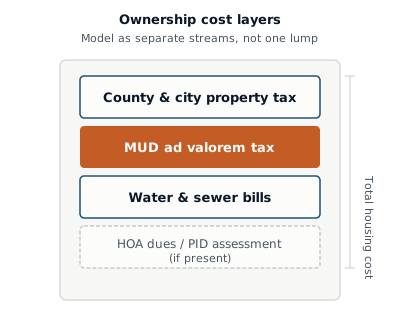
- 3Separate the money streams: MUD ad valorem tax, water/sewer setup and monthly bill, HOA dues if any, PID assessments if any.
- 4Ask how escrow will treat the MUD tax on your loan estimate and first-year projections.
- 5Compare total housing cost, not sticker price alone: principal and interest + taxes (all entities) + insurance + HOA + utilities.
- 6Scan for overlap: city limits vs ETJ, strategic partnership agreement notes, and whether a PID or HOA also applies (MUD vs PID vs HOA).
- 7Verify utility provider and deposit/setup with the district operator (separate from closing taxes).
- 8Keep copies of the signed notice and any district printouts with your closing file.
Notice to Purchaser (what it is, not how to fill it out)
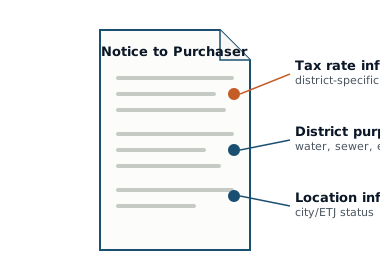
Texas law requires sellers of property in certain districts to provide a written notice to the purchaser about the district. In practice you will hear this called the MUD notice or Notice to Purchaser.
- The notice covers items such as tax information, bonds, fees, location relative to a city, strategic partnership agreements when applicable, and district purposes.
- Districts are generally expected to make the notice available (including online in many cases). Prefer the district’s own completed notice when it exists.
- TREC Form 59-0 is a voluntary TREC form that can help when a compliant district notice is not otherwise available. It is not a substitute for reading the real numbers for that district.
- Delivery timing matters under the Texas Water Code and contract practice. Late or missing notice can have legal consequences. That is attorney/agent territory.
Cite: TREC form page · Form 59-0 PDF · TAMU Clear as MUD
Questions to ask
- Which Municipal Utility District (name and number) includes this address?
- May I have the current Notice to Purchaser for this district?
- What is the current MUD tax rate information shown on the notice, and where do I verify it on the county tax site?
- Will my lender escrow the MUD tax?
- Who bills water and sewer, and what are deposit/setup steps after closing?
- Is there also an HOA, a PID, or both?
- Is the property in a city’s ETJ or corporate limits, and does the notice mention a strategic partnership agreement?
- Where are board meeting agendas posted if I want to watch how the district operates?
Cost mental model
Model ongoing ownership cost as separate streams, not one lump “MUD fee.” Compare total housing cost, not sticker price alone.
Things buyers often appreciate
- Infrastructure that supports newer community growth
- Clear district identity for utilities in many master-planned areas
- Public board process you can follow
Things buyers should diligence carefully
- Layered taxes and fees (MUD + others)
- Confusion between tax, water bill, HOA, and PID
- Assumptions that “the tax goes away soon”
- Skipping the Notice to Purchaser
We will not tell you whether a MUD home is “worth it.” That is a personal financial decision with your professionals.
Video
Video coming soon
What to read before you buy in a MUD.